

Superior Electrical Conductivity
The finished connection is designed to conduct current efficiently, without introducing a mechanical interface that can loosen over time.
Amiable · AURAWELD®
Amiable Impex manufactures exothermic weld powder, graphite moulds and the accessories required to create permanent electrical connections across grounding, lightning-protection, rail and industrial applications.
The process uses a controlled chemical reaction inside a purpose-designed graphite mould. The reaction generates molten weld metal that flows around the prepared conductors and solidifies as a strong molecular bond—without an external heat or electrical power source.
Connection performance
A correctly prepared exothermic weld combines electrical continuity, mechanical integrity and long-term resistance stability in one permanent connection.
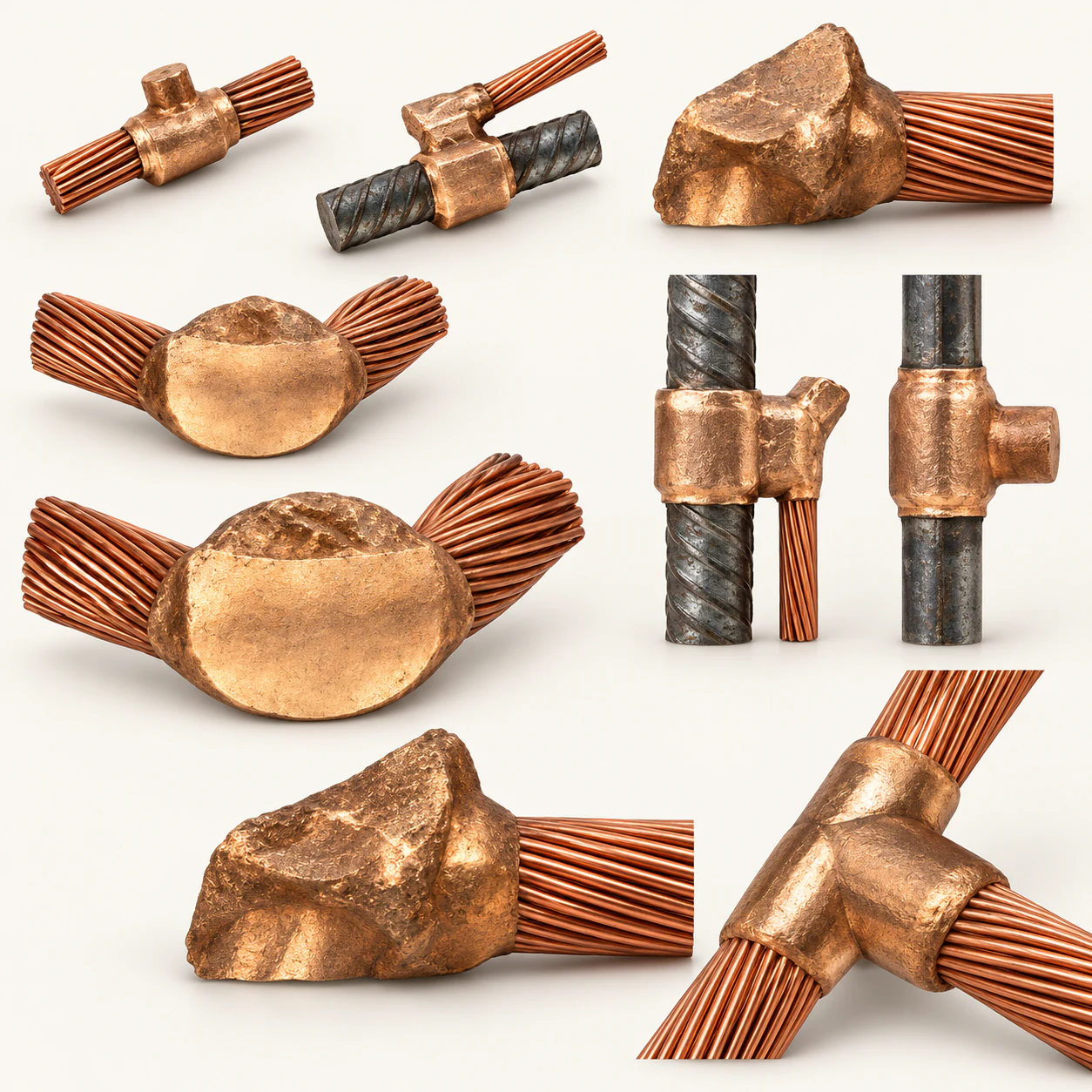
The finished connection is designed to conduct current efficiently, without introducing a mechanical interface that can loosen over time.
Molten weld metal surrounds the prepared conductors and solidifies as a permanent, homogeneous connection rather than a pressure-only joint.
A correctly made exothermic weld resists oxidation, galvanic deterioration and progressive degradation in demanding earthing environments.
The connection is designed to maintain low electrical resistance throughout its service life instead of gradually increasing at a bolted interface.
The welded joint can withstand repeated electrical discharges and short-circuit events when the correct mould, charge and preparation are used.
The solidified weld provides high mechanical and compression resistance for permanent grounding and bonding installations.
How exothermic welding works
The graphite mould positions the conductors, contains the reaction and shapes the molten metal into the required joint geometry.
Clean and dry each conductor so the mould cavity and joining surfaces are free from oxidation, moisture and debris.
Select the mould for the conductor sizes and joint geometry, then secure the conductors in the mould with the correct handle clamp.
Place the metal disk and measured weld powder in the crucible, add starting powder and ignite with a flint gun from a safe position.
Allow the molten metal to solidify, open the mould, remove slag and visually inspect the completed permanent connection.
The exothermic reaction creates intense heat—commonly above 2,500°F—so trained handling, dry equipment and the correct personal protective equipment are essential.
View the detailed processWhere exothermic welding is used
Exothermic welding is selected where a durable, low-resistance connection is required and regular retightening is not practical.
Permanent conductor-to-conductor and conductor-to-earth-electrode connections.
Reliable bonding paths for systems designed to carry lightning and surge currents.
Low-resistance connections for electrical networks, grids and industrial power assets.
Welded bonds and track-related connections where electrical continuity is critical.
Permanent joints for selected copper, steel, stainless-steel, brass and bronze components.
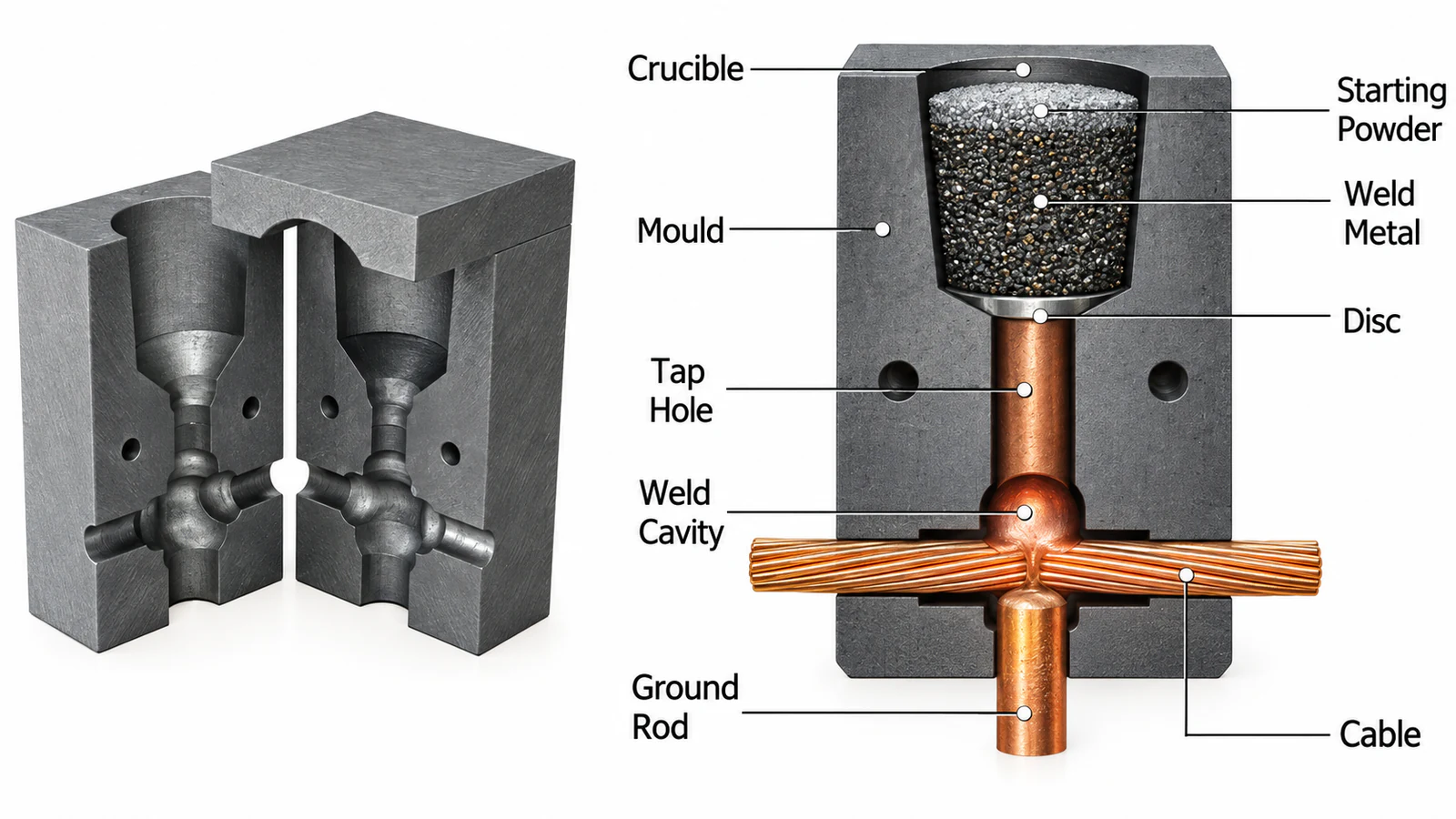
Exothermic weld powder explained
Exothermic weld powder uses a highly energetic reduction–oxidation reaction between aluminium and a metal oxide. Once initiated, the reaction releases enough heat to create molten metal without a torch or external electrical supply.
For conductive copper connections, copper oxide reacts with aluminium to produce molten copper and aluminium oxide. The molten copper settles through the mould into the weld cavity, while the lighter slag remains above it.
Iron oxide can be used in the broader thermite principle to produce molten iron. In every case, the mould design, powder selection, conductor preparation and moisture control must match the intended connection.
Field-ready equipment
Using the correct tools supports safer preparation, accurate mould alignment, clean ignition and consistent post-weld inspection.
Shapes the molten metal around the specified joint.
Closes and supports the mould during the weld.
Retains the charge before the reaction begins.
Produces the molten weld metal for the connection.
Provides the ignition path for the main charge.
Protect hands during preparation and mould handling.
Ignites the starting powder from a controlled position.
Clean conductors and the mould between welds.
Removes residue after the connection has cooled.
Cleans graphite mould surfaces without damaging them.
Helps close gaps where fine weld metal could escape.
Preheats and dries the mould and conductors when required.
Made for practical field use. Amiable Impex supplies exothermic weld powder, reusable graphite moulds and complete accessories with application guidance for projects in India and international markets.
Discuss your requirementExothermic welding FAQs
Essential guidance for evaluating the process, its applications and the equipment needed for a reliable permanent connection.
Ask a technical questionAn exothermic weld is a permanent metal connection created by a controlled heat-releasing reaction inside a graphite mould. Molten metal flows around the conductors and solidifies to form a molecular bond.
No external electrical power source is required for the welding reaction. The heat is generated by the exothermic reaction after the starting powder is ignited.
Typical applications include electrical earthing, grounding grids, lightning-protection systems, substations, rail and signalling bonds, and selected industrial metal connections.
Depending on the approved mould and weld-metal selection, the process can join copper conductors, copper tape, copper-clad earth rods, galvanized steel cable, stainless steel, steel, cast iron, brass and bronze.
The process creates a permanent molecular connection that does not rely on clamping pressure. A correctly installed joint offers low resistance, strong fault-current performance and resistance to loosening and corrosion.
A complete setup normally includes the specified graphite mould, handle clamp, metal disk, weld powder, starting powder, flint gun, cleaning brushes, slag tool, file card, sealing compound, flame torch and suitable personal protective equipment.
Share the conductor materials, conductor sizes, joint configuration, quantity and delivery location. The team can help identify the suitable weld powder, graphite mould and field accessories for the application.
Plan the right connection
Send the conductor materials, sizes, joint type, quantity and project location for a practical product recommendation.